When you click the link, it will take you to the corresponding page.
ディナーお任せ
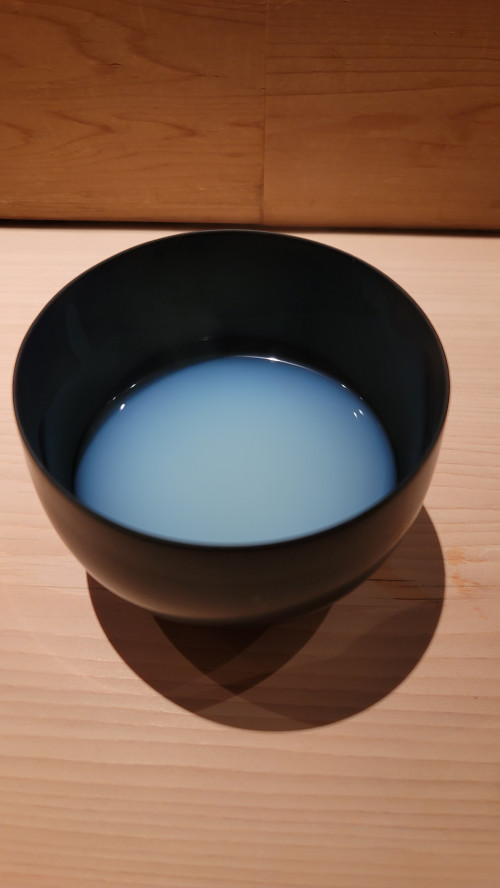
蛤吸い物
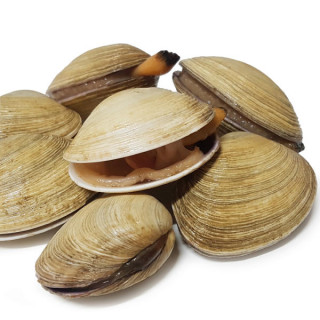
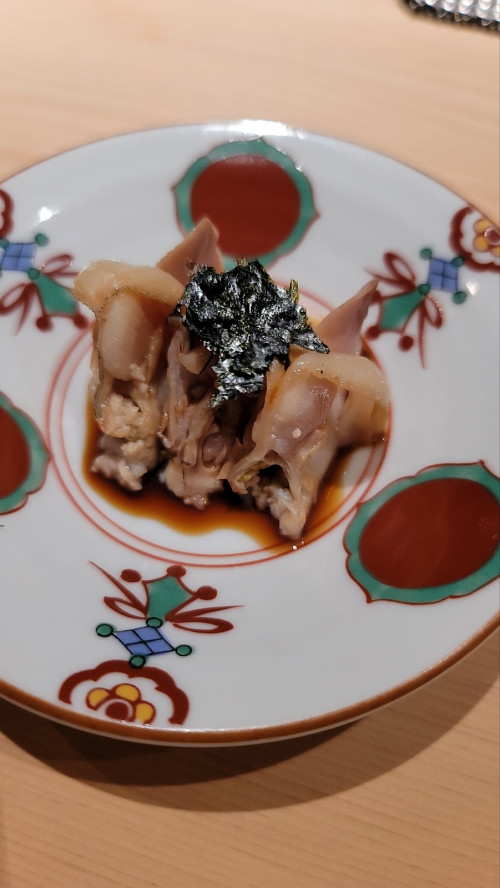
In Japanese, the clam species within the family Veneridae is called "hamaguri" (蛤). The name "hamanoguri浜の栗" is derived from combining the words "hama" (浜), meaning "beach," and "kuri" (栗), meaning "chestnut," due to its resemblance to a chestnut found on the beach. Hamaguri is a popular ingredient in many representative Japanese dishes, including "suimono" (吸物), a clear soup, "sakamushi" (酒蒸し), steamed with sake, "yaki hamaguri" (焼き蛤), grilled hamaguri, "nuta" (ぬた), a marinated dish, and "shigure hamaguri" (時雨蛤), a simmered dish. In sushi restaurants, hamaguri is typically not consumed raw. Instead, it is lightly cooked and marinated before being used in dishes, referred to as "nihamaguri" (煮蛤). In Japan, hamaguri is often associated with marital harmony, and it is common to serve hamaguri suimono at wedding banquets. Hamaguri clams naturally have two shells that fit perfectly together. However, when attempting to match the shells of different hamaguri clams, gaps may occur, preventing them from closing tightly. This appearance symbolizes a lifelong and happy relationship with a single partner. On March 3rd, during the Hina Matsuri (雛祭り) festival, also known as Girls' Day or Doll's Festival, people consume hamaguri suimono, hoping for good relationships and fortunes for children.
蛤香り焼き
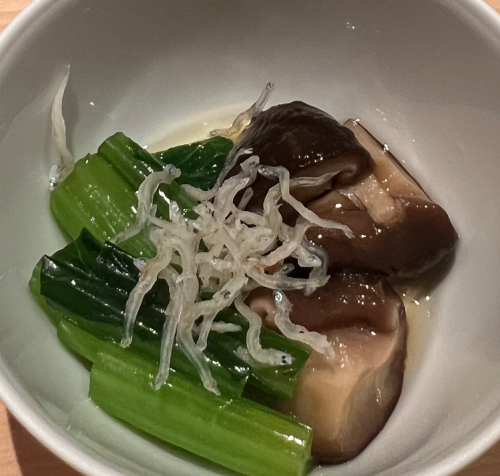
しいたけと水菜のおひたし
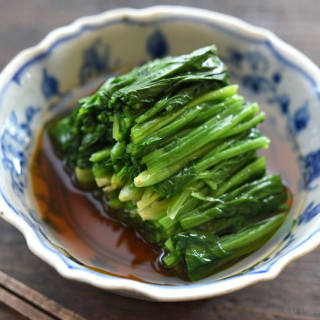
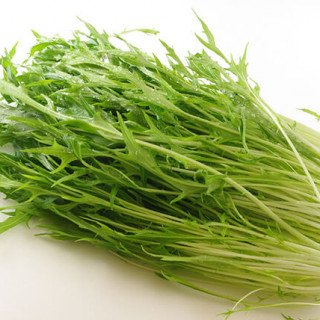
Ohitashi is a traditional Japanese cooking method where vegetables are briefly soaked in a seasoning liquid made from soy sauce, miso, mirin, and other ingredients to let the flavors infuse. The name "Ohitashi" comes from the verb "浸す" (hitasu), which means "to soak" or "to immerse." This cooking method is simple yet enhances the natural flavors of the ingredients. Commonly used ingredients for ohitashi include spinach, mizuna, chives, burdock root, daikon, and mushrooms. These vegetables are quickly blanched and then soaked in the seasoning liquid to absorb the flavors. Spinach ohitashi is particularly popular and is a common side dish in Japanese households. The seasoning liquid for ohitashi is made from soy sauce, miso, mirin, and dashi, with optional additions of bonito flakes or sesame seeds to enhance the flavor. This seasoning liquid blends well with the ingredients, adding umami and enhancing the color of the vegetables. Ohitashi is beloved as a basic side dish in Japanese home cooking because it can bring out deep flavors with a simple method, and it offers an easy way to consume healthy vegetables.
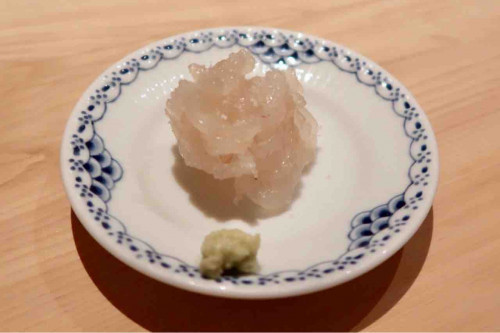
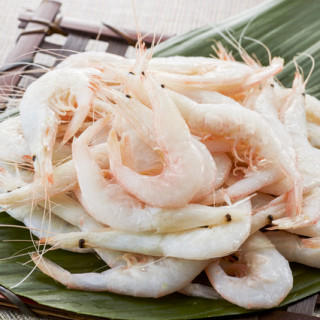
白エビ昆布締め
White shrimp (白エビ) is a specialty of Japan's Toyama Bay, often referred to as the "Jewel of Toyama Bay" due to its rarity and beauty. The main production area is Toyama Prefecture, where the unique geography and abundant plankton of Toyama Bay provide an ideal habitat. White shrimp are about 5–7 cm long, characterized by their translucent white bodies, making them not only a delightful ingredient but also visually appealing. White shrimp are known for their delicate and refined sweetness, which is particularly highlighted when served as sashimi or sushi toppings. Freshness is crucial when used for sushi, with transparency and a firm, bouncy texture being key characteristics. The sweetness and smooth texture offer a unique experience compared to other shrimp. White shrimp sushi is a popular choice in high-end sushi restaurants, appreciated for both its appearance and taste. In addition to being served as sashimi or sushi, white shrimp are also enjoyed in various dishes such as tempura, kakiage, and simmered dishes. However, their rarity makes them somewhat expensive and difficult to find outside Toyama. To fully appreciate white shrimp, visiting Toyama is the best option, where the region's fresh white shrimp dishes provide a truly special culinary experience.
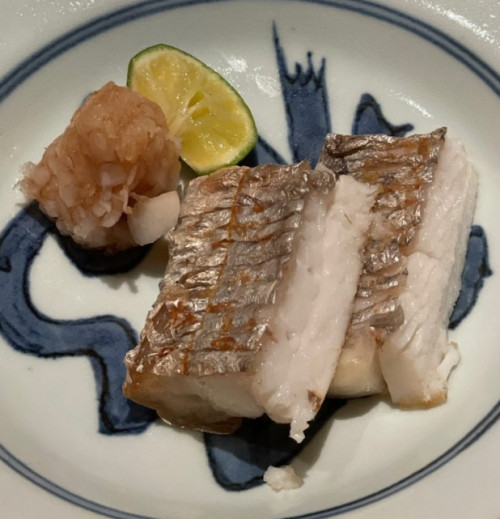
タチウオ焼き
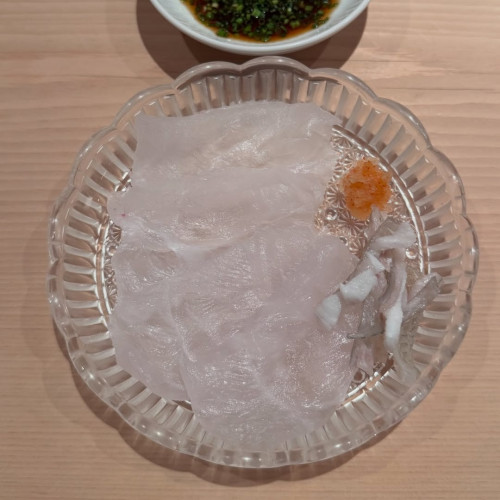
平目薄造り
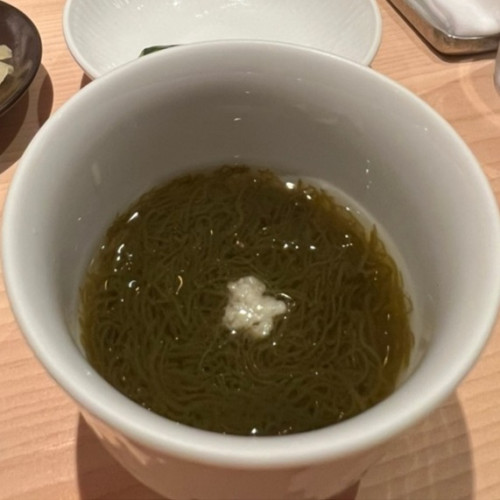
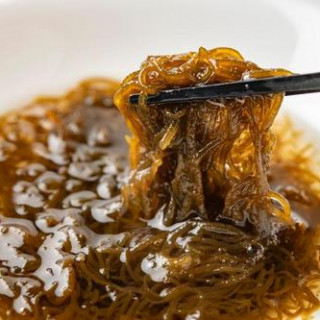
もずく酢
Mozuku is a type of seaweed widely consumed in Japan, especially in Okinawa. It's known for its health benefits, rich in fucoidan, which helps with antioxidant effects, boosting immunity, and regulating blood sugar and cholesterol. Its slimy texture is distinctive, often enjoyed in vinegar or soups, and is popular in summer dishes.
子持ちやりいか
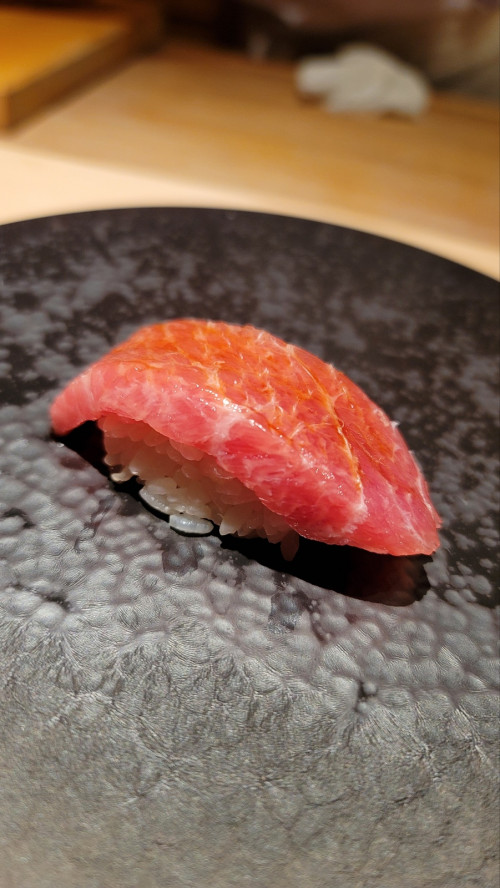
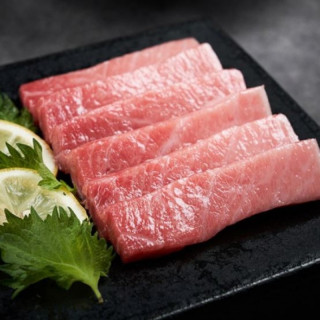
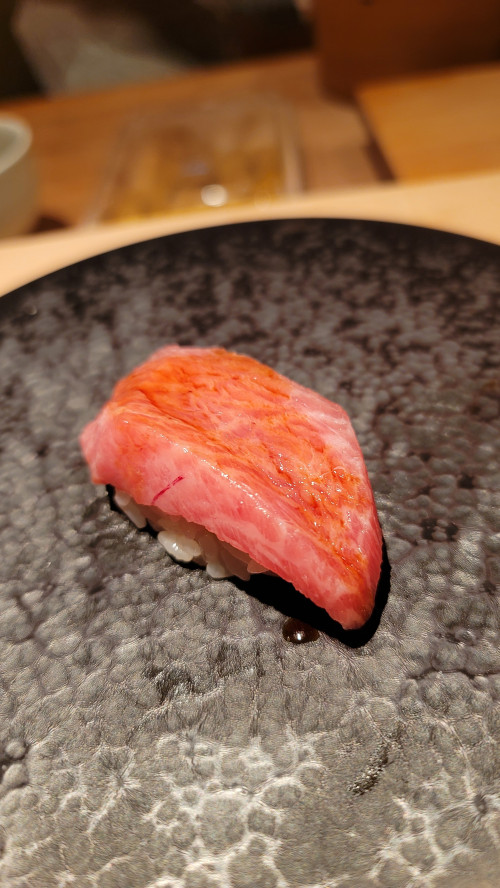
中とろ
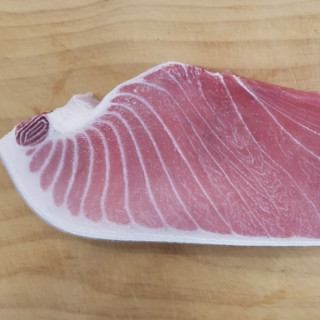
The different parts of a tuna can be broadly categorized into two: the fatty portion called "toro" and the other parts known as "akami" or red meat. Toro can also be further divided into various sections, but the most fatty portion known as "otoro" (大トロ) and the representative toro section with a moderate amount of fat known as "chutoro" (中トロ) are often mentioned. Generally, otoro refers to the belly area closer to the head of the tuna, while chutoro refers to the meat found in the belly and back areas. However, there is no clear definition that distinguishes otoro from chutoro. Recently, Sushineta, which is more than twice the price of akami, has gained popularity. However, in old Japan, akami was the preferred part of the tuna, while toro was considered a discarded section. The people of old Japan preferred a clean taste over a fatty one, and due to the lack of refrigeration and preservation techniques, the fatty toro section easily underwent flavor changes. During the Edo period, it was even considered a fish that not even a cat would bother to touch, and was called "nekomatagi" (猫またぎ) meaning "a fish that a cat simply passes by." It was only later, as the Japanese palate evolved and refrigeration technology advanced, that toro gradually gained its current popularity. The term "toro" originates from the Japanese word "torokeru" (とろける), meaning to melt. It was in 1918 at the Nopo sushi restaurant "Yoshinozushi" in Tokyo that the term "toro" began to be used and spread nationwide. Prior to that, it was referred to as "abu" (アブ), derived from the first character of "abura" (脂), meaning fat, indicating the fatty section.
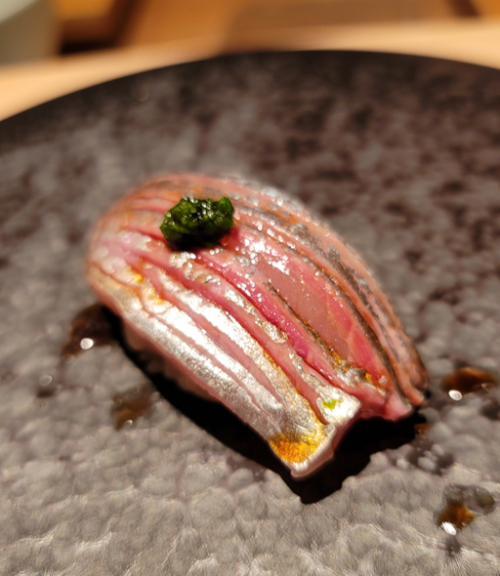
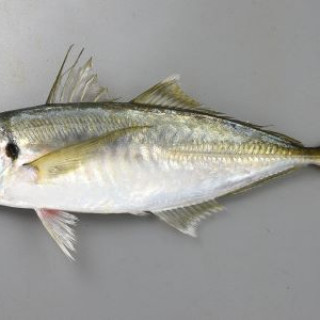
鰺
Aji (鯵), also known as horse mackerel, is a popular marine fish in Japan, belonging to the family Carangidae. It typically measures 20 to 30 cm in length and is a type of blue-backed fish. Aji has a beautiful sheen of silver and blue, with distinctive black spots along its sides. The best season for aji is mainly in summer, particularly from June to August, when it is at its tastiest. During this period, aji is rich in fat and has firm flesh, offering exceptional flavor. Aji is used in a variety of dishes, with its freshness highlighted in sashimi and sushi, which are very popular. It can also be enjoyed grilled with salt, dried, in nanbanzuke (a type of marinated dish), or tataki (lightly seared). Dried aji is easy to store and cook, making it a common choice in home cooking. Additionally, nanbanzuke, where fried aji is marinated in vinegar, soy sauce, and chili, offers a refreshing taste. Thus, aji is widely loved for its reasonable price and rich nutritional value, making it a staple in home cooking and izakaya menus. Its versatility in cooking methods and compatibility with various dishes add to its appeal.
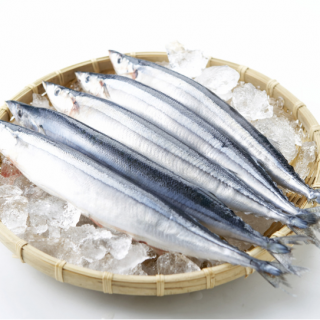
Among the fish used as sushi toppings (neta), "Hikarimono" refers to fish with a bluish color on the back and shiny silver on the belly. Examples include mackerel (saba), horse mackerel (aji), gizzard shad (kohada), sillago (kisu), sardine (iwashi), Pacific saury (sanma), and halfbeak (sayori). These fish are known to be delicate and perish quickly once out of the water, making storage and live distribution difficult. Because of their strong smell, they are often marinated in vinegar (shime) and served with aromatic condiments such as shiso leaves, pickled ginger, wasabi, or chopped green scallions (menegi) to enhance the flavor.
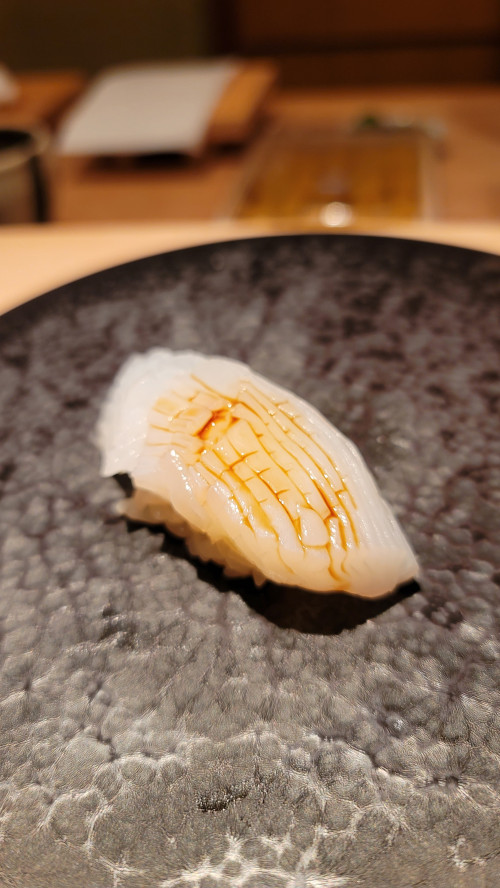
アオリイカ
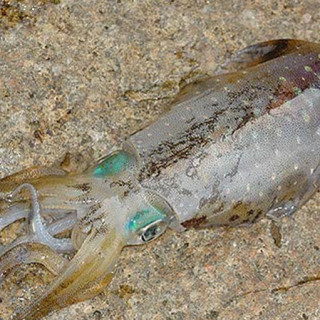
Two types of squid commonly used in sushi restaurants are Toriika and Aoriika. Aoriika refers to the Oval Squid. When handled, it undergoes a colour change. The standard name for the striped squid in Japanese is 'Aoriika,' but it is known as 'Mizuiika' in the Kyushu dialect. The Japanese kanji name for Aoriika is a bit complicated and written as '障泥烏賊' (あおりいか). '障泥' is a Japanese kanji term 'flipping up mud with lips.' As the name suggests, when animals run, mud splashes onto people, and to prevent this, something is extended laterally under the saddle. It resembles the fin-like structure on the side of the body of the striped squid. The striped squid is often called the king of squid. Hence it commands a higher price. Therefore, it is commonly used as an ingredient in upscale sushi establishments. From late spring to midsummer, it's the perfect season to enjoy the white-patterned cuttlefish! This relatively expensive white cuttlefish, Aori-ika, is commonly called 'soft silk' in Taiwan and 'big-tail cuttlefish' in Hong Kong. The term '障泥' in the Japanese kanji refers to the mudguard hanging on a horse's body under the saddle. Though the name may seem peculiar, it indirectly reflects its characteristics of being 'soft' and 'big.' While Aori-ika is often seen in sushi bars at high prices, it is also a seafood that can be caught year-round in Taiwanese and Hong Kong waters (of course, there may be differences in size and quality!). This attracts many fishing enthusiasts to go squid fishing. Even if you don't go out to sea directly, Hong Kong residents can visit the Sai Kung seafood market, and Taiwanese people can find them in major markets. Remember, the brighter the eyes of the big-tail cuttlefish and the layer of greenish-blue eyeshadow surrounding them, the fresher they are. However, the presence of Aori-ika in general street markets and supermarkets in Hong Kong is extremely rare. Sushi chefs usually create patterns on the snowy white cuttlefish meat under a film, briefly blanch it in hot water, and then brush it with sweet sauce. Its thick texture, intense sweetness, and lingering flavour, combined with its enormous size, have earned Aori-ika the title king of squid.
白魚
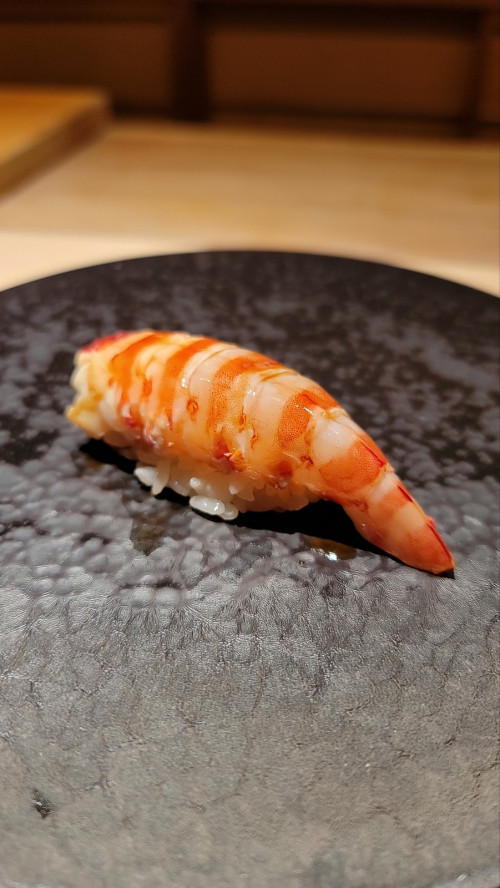
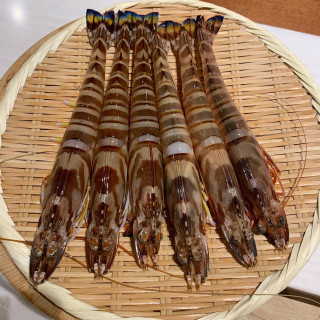
車海老
Kuruma shrimp, known as "Kurumaebi" in Japan, is a type of shrimp found in warm waters, including the coastal regions of Japan. It is highly regarded as a premium seafood due to its delicious taste. The shrimp typically measures around 20-30 cm in length and is characterized by its brown and white striped pattern. The flesh of the Kuruma shrimp is firm and sweet, making it delicious whether eaten raw or cooked. In sushi restaurants, Kuruma shrimp is a popular choice for sushi toppings (neta) due to its exquisite taste and beautiful appearance. There are two main ways to serve Kuruma shrimp as sushi neta: raw ("Nama Kurumaebi") and blanched ("Yubiki Kurumaebi"). Raw Kuruma shrimp offers a bouncy texture and sweet flavor, while blanched Kuruma shrimp provides a subtle sweetness and a tender texture. Both are enhanced when enjoyed with soy sauce and wasabi. Additionally, Kuruma shrimp is often served as nigiri sushi, with the shrimp's tail left intact for a visually appealing and luxurious presentation.
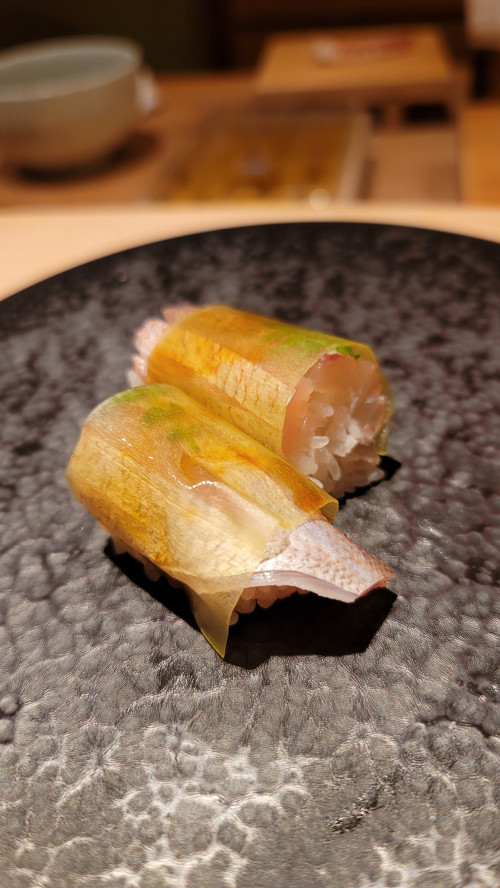
春子
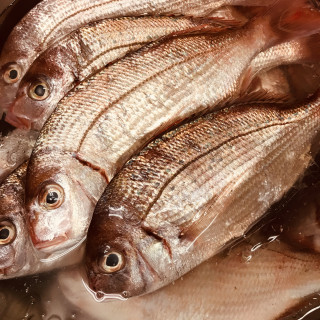
Kasugo refers to the young sea bream. Among seasonal fish, its cherry blossom-like skin color and the aura from its small body stand out remarkably. Kasugo generally refers to the juveniles of various sea bream species, particularly red sea bream (madai), yellow sea bream (kidai), and crimson sea bream (chidai). The yellow sea bream is also known as renkodai. Interestingly, while fully grown sea bream is classified as white-flesh fish (shiromi), the juvenile kasugo is categorized as hikarimono (silver-skinned fish). Juveniles are usually defined as fish weighing under 100g (less than 14 cm in length).
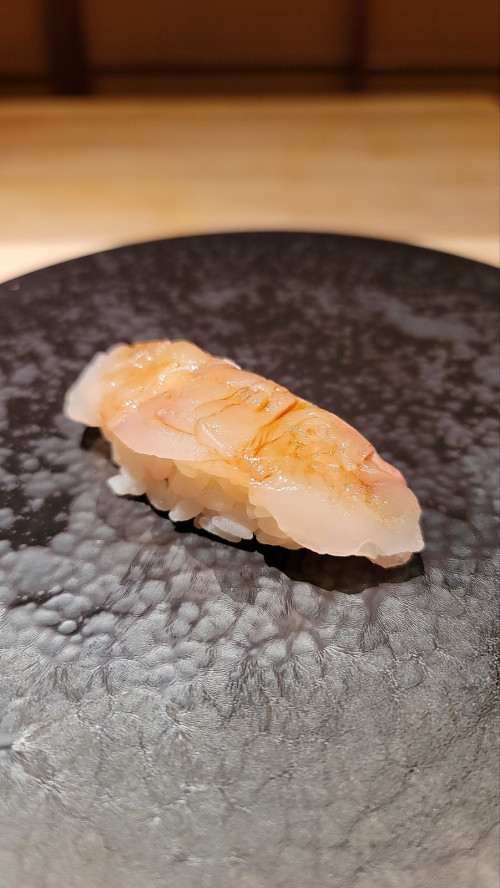
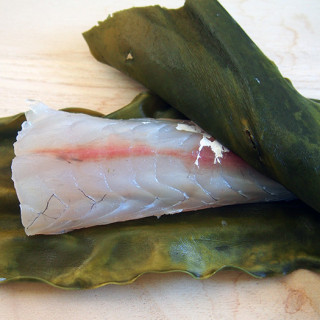
ヒラメ昆布締め
Kobujime is a method of aging sashimi, typically white-fleshed fish like sea bream, grouper, or flatfish, by wrapping it in kombu (kelp) for one to two days. Originally a traditional culinary method from Toyama Prefecture, it was developed as a way to preserve sashimi. The process involves sprinkling salt over the fish, layering kombu on top, sealing it tightly, and refrigerating it for several hours to a few days. Kombu absorbs moisture from the fish, tightening its texture and preventing oxidation to maintain freshness. At the same time, the glutamic acid and other components in kombu infuse into the fish, creating a deeper flavor than fresh sashimi. A key point in kobujime is to use dried kombu without rinsing it in water. While dust or debris should be wiped off with a dry cloth, the white residue on the kombu contains flavor-enhancing components. While many people say "konbujime," the correct Japanese pronunciation is "kobujime." The name combines "kombu" (kelp) and "shime" (tightening or preserving), with "shime" becoming "jime" due to Japanese phonetic changes, similar to the linking sounds in Korean. On menus in Japan, it is often written as "昆布〆" using the character for "shime" (〆). The reason it is called "kobujime" instead of "konbujime" is multifaceted. When used in dish or menu names, "kombu" becomes "kobu," as seen in "kobucha" (kelp tea), "kobumaki" (kelp roll), and "kobujime." In the Kansai region, dishes using kombu are thought to sound more elegant when pronounced "kobu" rather than "konbu." Another theory suggests that sushi restaurants in Hokkaido adopted "kobujime" on their menus because it was easier to pronounce than "konbujime." Overall, pronunciation convenience seems to play a significant role.
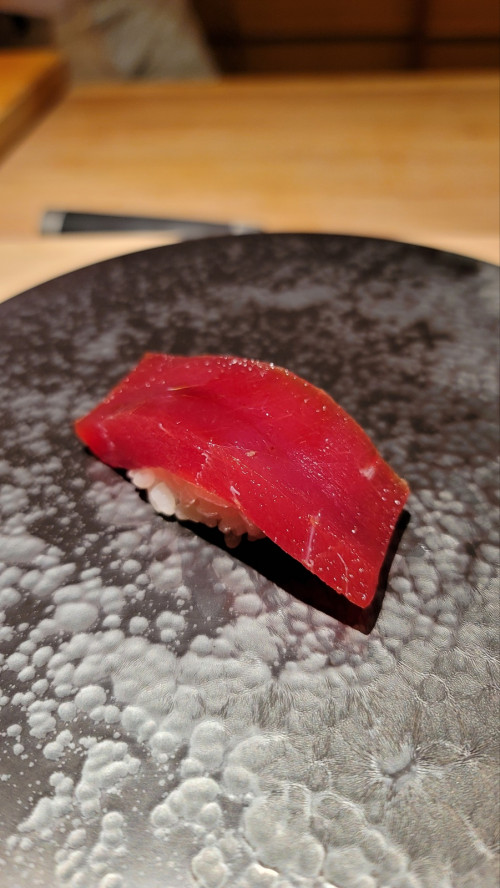
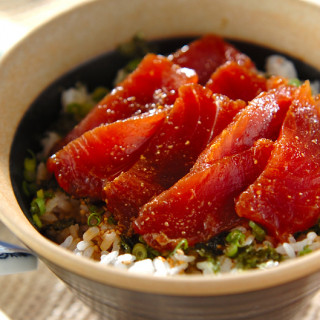
マグロ赤身漬け
渍けZuke is a dish in which sashimi is marinated in a seasoning liquid made with soy sauce. When refrigeration and freezing technology was not developed, this method of preserving perishable raw fish was adopted from the Edo period. In addition to improving preservation, it can eliminate fishy smells and deepen the taste. Therefore, this is also a prevalent cooking method in today's generation with advanced distribution technology. It mainly produces sashimi, such as tuna red meat, bream, and horse mackerel. Put zuke on top of rice and eat it in a rice bowl. This is called zukedon.
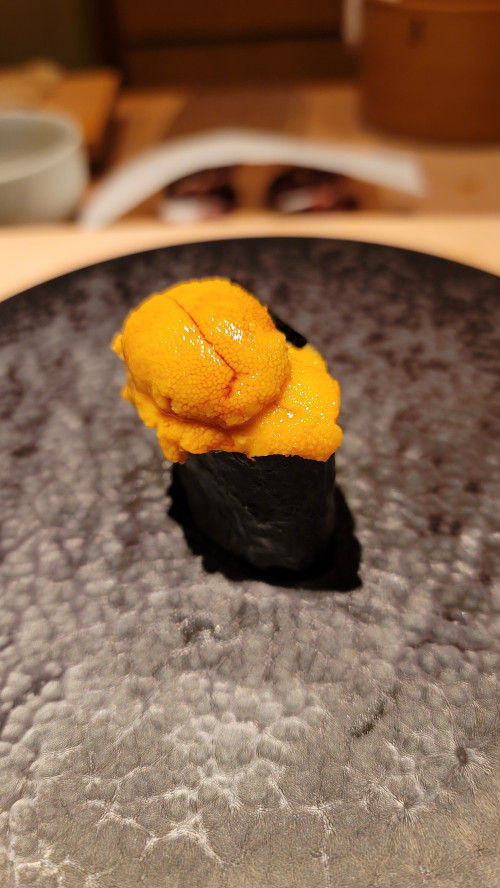
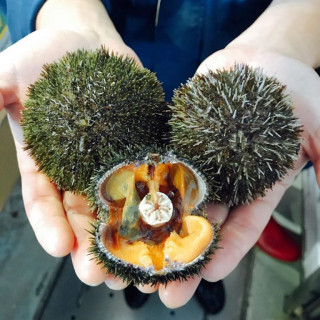
バフンウニ
Bafun uni (horse dung sea urchin) is a type of sea urchin popular in Japan, characterized by its small shell and vibrant orange roe. The name comes from the resemblance of its shell to horse dung. Its flavor is rich, sweet, and refined, with a creamy texture that melts in the mouth. It is commonly eaten raw as sashimi or sushi to fully appreciate its delicate taste. Bafun uni is primarily harvested in Hokkaido and the Tohoku region, with summer being its peak season. Due to its rarity, it is considered a luxury item, often commanding high prices. A small box (referred to as “hako”) can range from several thousand yen to over 10,000 yen, depending on the origin and quality. Its exquisite taste and premium status make it a favorite for special meals and gifts.
大とろ
The parts of tuna can be broadly divided into two categories: the fatty part called "toro" and the lean part called "akami" (red meat). Toro itself can be divided into several parts, but the most representative are "otoro" (大トロ), which is the fattiest part, and "chutoro" (中トロ), which has a balance of akami and fat. Generally, otoro refers to the fatty belly meat near the head of the tuna, while chutoro refers to the meat found in the belly and back areas of the tuna. However, there are no strict rules that clearly define the difference between otoro and chutoro. Recently, toro has become a popular sushi topping, often costing more than twice the price of akami. However, in the past, Japanese people ate only the akami part of the tuna, and toro was considered a discard. The Japanese in the old days preferred a clean taste over a fatty one, and due to the lack of refrigeration and distribution technology, the fatty toro parts would spoil quickly. In the Edo period, it was even referred to as "nekomatagi" (猫またぎ), meaning something even cats would pass over. As Japanese tastes evolved and refrigeration technology developed, toro gradually gained its current popularity. The name "toro" is derived from the Japanese word "torokeru" (とろける), which means "to melt." It was first called toro in 1918 by the long-established sushi restaurant Yoshinozushi (吉野鮨) in Tokyo, and this name spread and became widely used. Before that, the fatty part was called "abu" (アブ), derived from "abura" (脂), meaning fat.
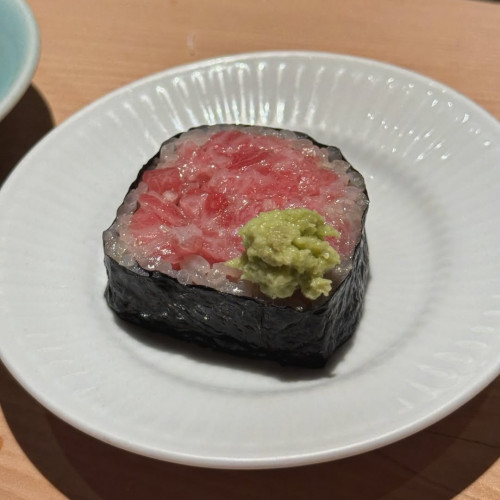
ネギトロ中巻き
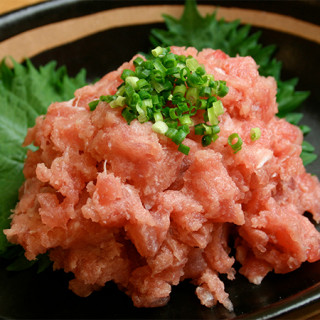
Negitoro is one of the ingredients for sushi, made from minced tuna turned into a paste. It is used in battleship rolls, thin rolls, and hand-rolled sushi and is also eaten as a bowl dish. There are various theories regarding the origin of the name "Negitoro." It's commonly believed that the Japanese word for green onion, "negi," and the term for the fatty part of tuna, "toro," were combined to create "Negitoro." Although the actual "toro" part of the tuna isn't used, the term is used to describe the melting texture of the minced tuna. Even if green onions aren't mixed in, it's still called "Negitoro." It is said that Negitoro originally began when the meat scraped off from the tuna's bone, known as "Nakaochi," was used as a meal for sushi restaurant staff.
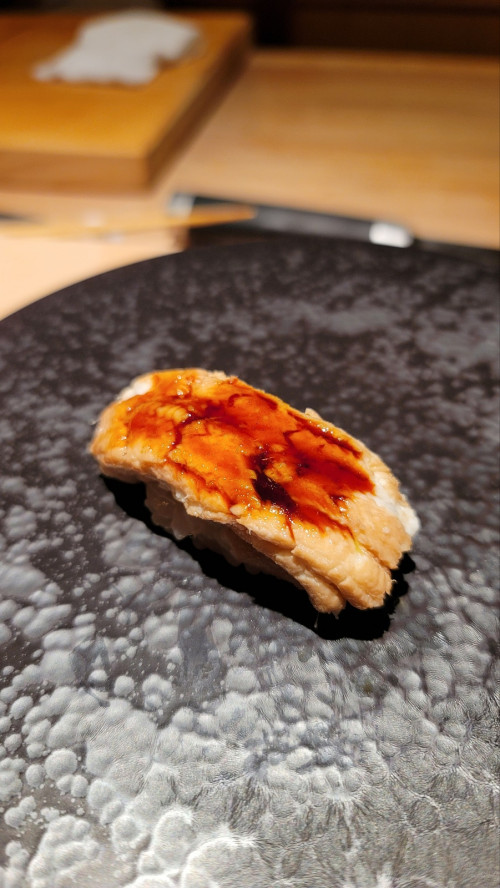
穴子
An essential ingredient in sushi and tempura is the conger eel. The conger eel, also known as Anago in Japanese, is commonly referred to as the sea eel. "Anago" originates from its habit of spawning in crevices between rocks or sandy areas. Although conger eels and freshwater eels (unagi) have a similar appearance, conger eels have white spots along their sides and fewer scales. Unlike the rich and oily flavour of freshwater eels, conger eels have a milder taste due to their lower fat content. In the Kanto region of Japan, conger eels are commonly prepared as "Nianago" (simmered conger eel) or "Tenpura" (tempura). In contrast, in the Kansai region, they are often grilled and known as "Yakianago" (grilled conger eel).
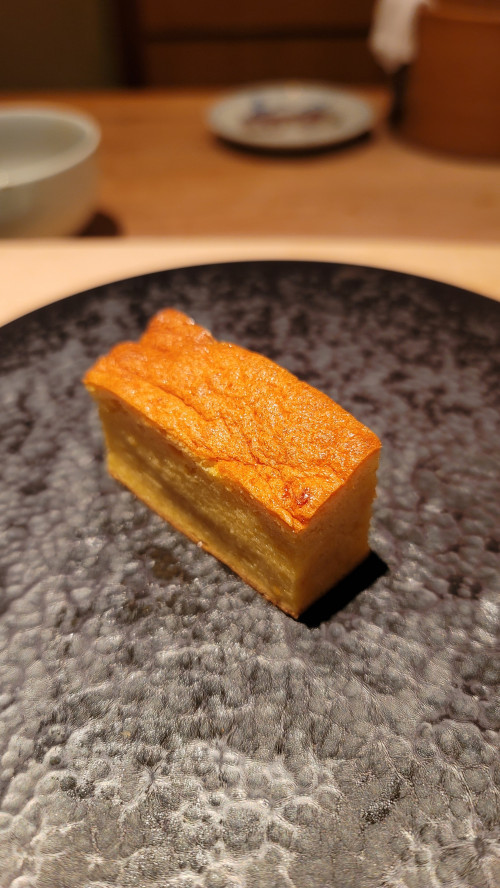
玉子焼き
The "Gyoku" (egg) served at sushi restaurants is a sweet, fluffy omelette that can also be enjoyed as a dessert. It is called "Gyoku" because its shape and color resemble the precious gem "gyoku" (jade). The beautiful golden layers of the omelette are reminiscent of a gemstone. The basic way to make Gyoku is to mix eggs with sugar and dashi, and then carefully cook it using a frying pan or a specialized tamagoyaki pan. The chef pays close attention to the cooking time and seasoning to create uniformly golden layers. Many sushi restaurants add ground white fish or shrimp to the egg mixture to give it a richer, smoother texture and flavor. This addition makes Gyoku different from a simple omelette, giving it a unique, deep taste. The appearance of Gyoku is also important, requiring a uniform color and shape. This dish tests the skill and experience of the chef and serves as a measure of the sushi restaurant's quality. For diners, Gyoku is a memorable, flavorful dish that perfectly concludes the meal.